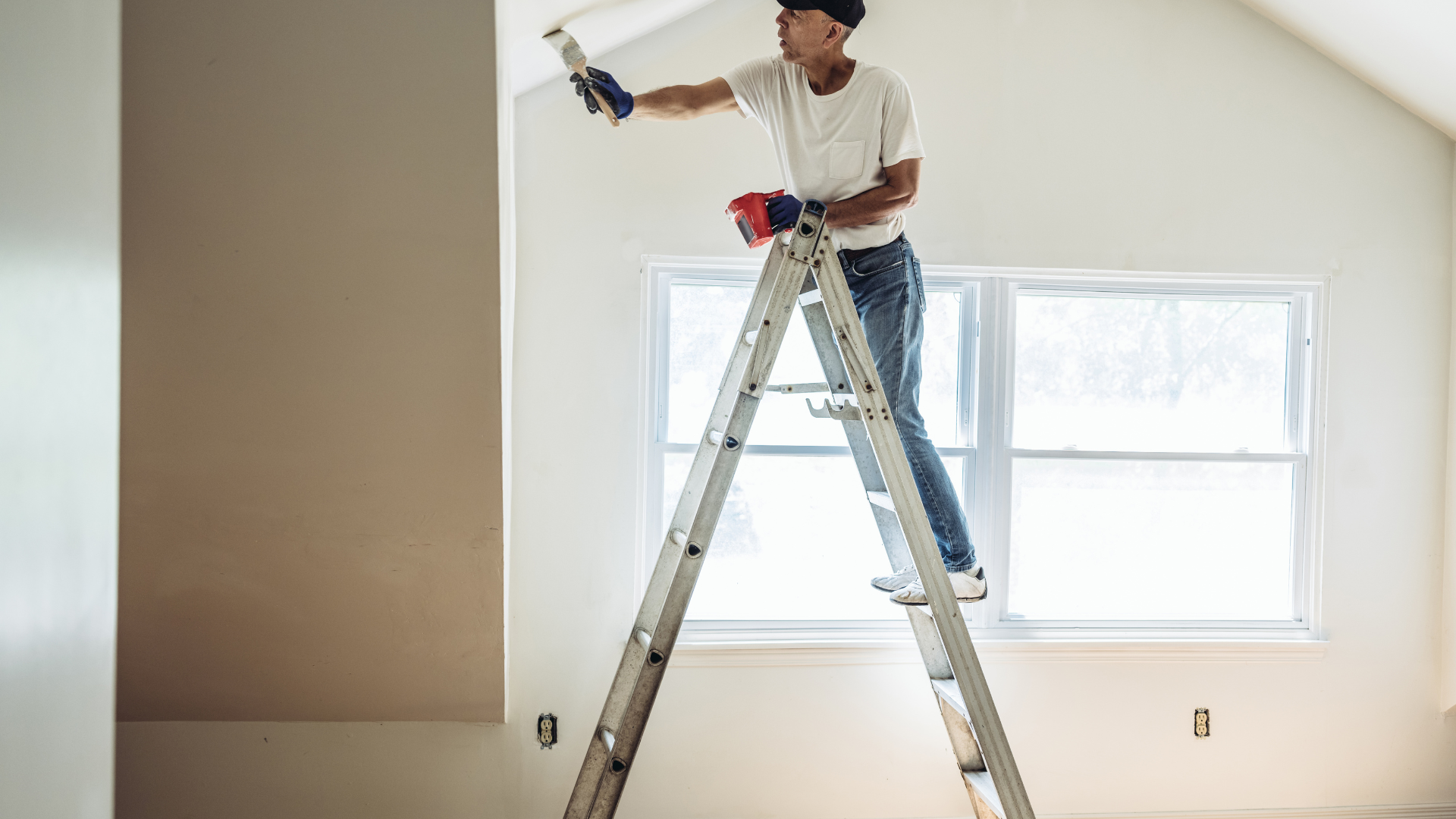

A great interior paint job is mostly prep. Color matters, sure, but what separates “freshly painted” from “wow” is what happens before the first coat goes on: protecting floors, fixing wall imperfections, cleaning, sanding, caulking, and priming the right way.
This guide breaks down the exact interior paint prep steps that consistently deliver clean lines, smooth walls, and durable results. If you already know you want a pro to handle it, start with interior and exterior painting services so your project gets scoped correctly and finished with the right system for your surfaces.
Why prep is the real paint job
The paint is thin. It doesn’t hide much, and it highlights everything: nail pops, ripples in spackle, greasy fingerprints near light switches, and old glossy trim that was never sanded. Good prep solves three big problems:
1) Adhesion
If paint can’t grip the surface, it peels, chips, or scratches easily.
2) Smoothness
Even premium paint won’t look smooth over dents, rough patches, or roller fuzz.
3) Clean edges
Crisp lines, tidy trim, and uniform sheen are all easier when the surface is properly prepared.
Before you start: make the right plan for your rooms
Start by deciding what you’re painting and what “done” should look like. This sets expectations and helps you avoid halfway choices that cause redo work later.
Identify the surfaces
- Walls only
- Walls and ceilings
- Trim, doors, and baseboards
- Cabinets or built-ins (these require a different prep level)
Choose the finish level you want
- “Clean refresh” (good for quick updates)
- “Flawless finish” (best for main living areas, entryways, and resale)
If you’re trying to make a room feel brighter or larger, these design-focused tips pair well with prep: interior painting tips to make small rooms look bigger.
Tools and materials that actually help (and what to skip)
You do not need every gadget in the paint aisle, but a few basics make prep faster and the finish better.
Must-haves
- Drop cloths or protective floor covering
- Painter’s tape (high quality)
- Spackle or patching compound
- Putty knife (flexible, medium width)
- Sanding sponge (fine grit) and/or sandpaper
- Caulk (paintable) for trim gaps
- Primer (stain-blocking if needed)
- Mild cleaner or degreaser, microfiber cloths
- Vacuum or dust brush
Nice-to-haves
- Work light (shows wall flaws clearly)
- Extension pole for sanding and painting
- Tack cloth (for fine dust on trim)
Skip
- Cheap tape that bleeds
- “All-in-one miracle” products that promise no prep
- Heavy texture sprays as a shortcut for bad walls
Step 1: Clear the room and protect everything
The fastest way to ruin a project is to try to paint around stuff.
What to move
- Furniture to the center and cover it, or remove it entirely
- Curtains, wall art, and shelving
- Rugs (or cover them fully)
Protect the right areas
- Floors
- Baseboards and trim (even if you’ll paint them later)
- Outlets, switches, and fixtures
- Door hardware if painting doors
Pro tip: If you’re painting multiple rooms, label tape rolls and supplies by room so you do not mix colors, sheen, or trim paint.
Step 2: Remove plates, hardware, and “tiny obstacles”
Prep is faster when you remove what’s in your way.
- Switch and outlet covers.
- Curtain brackets (if painting near them)
- Door handles (if painting doors)
- Vent covers (optional but cleaner)
Keep screws in a small bag per room. This simple step prevents last-minute hunting.
Step 3: Inspect the walls, and the paint will show them
Turn on a strong light and look across the wall at an angle. You’ll spot dents and patches you cannot see straight on.
Mark issues
Use a small piece of painter’s tape to mark:
- Nail holes and anchors
- Dings and dents
- Cracked corners
- Peeling paint edges
- Water stains
- Old patchwork that is raised or rough
This “walkthrough” takes 5 to 10 minutes and saves hours later.
Step 4: Patch and repair like you mean it
This is where smooth walls are made.
Nail holes and small dents
- Apply patching compound
- Let it dry fully
- Apply a second thin layer if it shrinks
Larger damage or cracks
- Widen loose cracks slightly (so you remove weak edges)
- Patch in layers, not one thick blob
- For corners, use the right compound and feather out wider than you think
The key skill: feathering
Feathering means the patch transitions smoothly into the wall with no hard ridge. You want the patch wider, not thicker.
Step 5: Clean the walls (yes, even if they look clean)
Paint does not like grease, dust, or residue. Kitchens, hallways, and rooms with kids or pets usually have buildup even when they look fine.
What to clean
- Around switches and door frames
- Near thermostats
- Behind furniture lines
- Bathroom walls with hair spray or product mist
Use a mild cleaner or a light degreaser and wipe with a damp cloth, then let the walls dry. If you skip this step, you can get poor adhesion or fish-eye defects.
Step 6: Sand the patches and dull glossy surfaces
Sanding is not about making dust for fun. It’s about two things: smoothing repairs and giving paint something to grip.
Sanding patches
- Use a fine sanding sponge
- Sand until the patch edge disappears into the wall
- Run your hand over it with your eyes closed, and you’ll feel the bumps better
Sanding glossy paint or trim
If the surface is shiny, paint can slide off over time. Lightly scuff it so it becomes dull, then wipe it clean.
Step 7: Vacuum and dust wipe (this is the “pro clean” step)
Dust left on the wall becomes texture under paint and can cause adhesion issues.
- Vacuum baseboards and trim edges
- Wipe walls with a microfiber cloth
- Wipe trim after sanding
If you patched a lot, assume there is dust everywhere, because there is.
Step 8: Caulk gaps where trim meets walls
Caulk is the difference between “painted” and “finished.” It creates clean, continuous lines.
Where caulk helps most
- Along the top edge of baseboards
- Around the door trim and the window trim
- Small gaps in crown molding or casing joints
Use paintable caulk. Apply a thin bead and smooth it. If you overdo it, you’ll spend time cleaning it up.
Step 9: Prime the right spots (and know when to prime the whole wall)
Primer is not optional when the surface is uneven in absorption or has stains. It prevents flashing, those dull or shiny patches that show through after painting.
Spot prime when you have
- Fresh patches
- Areas that were sanded heavily
- Small repaired sections
Use stain-blocking primer when you have
- Water stains
- Smoke staining
- Marker, crayon, or persistent discoloration
Prime the whole wall when
- You’re switching from very dark to light
- The wall has multiple patch zones
- The existing paint is uneven or chalky
If you are choosing a neutral whole-home palette, this article helps you keep colors consistent room to room: best neutral paint colors for your whole house.
Step 10: Tape smart or cut in clean, but do it consistently
There are two clean ways to handle edges. The wrong way is mixing methods randomly.
If you tape
- Use quality tape
- Press the edge down firmly
- Do not leave tape on for days
- Pull the tape off at an angle while the paint is slightly tacky
If you cut in
- Use a good angled brush
- Keep a wet edge
- Work in small sections and stay steady
A lot of “bad paint jobs” are actually “bad edge plans.” Pick a method and execute it well.
Step 11: Confirm the right paint and sheen before you open the can
Sheen choices affect both the look and how forgiving the wall is.
Quick sheen guide
- Flat or matte: hides wall flaws better, less wipeable
- Eggshell: good all-around for living spaces
- Satin: better for high-traffic areas, can show wall flaws more easily
- Semi-gloss: great for trim and doors, highlights imperfections
If your walls have lots of minor imperfections, going too shiny can make the defects pop.
Step 12: Do a small test area before committing
Even if you love the sample, lighting changes everything. Test:
- One small section on the main wall
- One section near a window
- One section under artificial light
Let it dry and view it at different times of day. This prevents regret and repainting.
A simple “pro-level” prep checklist you can reuse
Before painting day, confirm:
- The room is cleared and protected
- Switch plates and obstacles removed
- Repairs are smooth to the touch
- Walls are clean and dry
- Dust is vacuumed and wiped
- Gaps are caulked where needed
- Primer is applied where required
- The tape or cut-in plan is set
- Paint sheen and color are confirmed
If you want “trust you can see,” this checklist is it. It’s what separates a clean result from a rushed one.
FAQ
How long does prep take for an average room?
It depends on the wall condition. A clean room with minimal patching can be prepped in a few hours. Rooms with lots of repairs, glossy trim, or multiple stains can take a full day of prep.
Do I really need primer if I’m using a premium paint?
Yes, in many cases. Premium paint is not a replacement for primer on patches, stains, or slick surfaces. Primer solves adhesion and absorption problems that paint alone cannot reliably fix.
Why do my patches show through after painting?
This is usually flashing. The patch area absorbs paint differently from the rest of the wall. Spot priming patches before painting is the most common fix.
Should I wash walls with soap and water before painting?
If the room has grease, residue, or fingerprints, cleaning helps a lot. Kitchens and high-traffic areas benefit the most. Use a mild cleaner, rinse lightly if needed, and let it dry fully.
Is sanding always necessary?
If you patched, yes. If the surface is glossy, yes. If the walls are already matte, clean, and in good shape, sanding can be minimal. The goal is smooth repairs and good paint grip.
How do I avoid paint bleeding under tape?
Use quality tape, press edges firmly, and remove tape at the right time. Bleed-through often happens when the tape is low quality, poorly pressed, or left on too long.
What’s the biggest prep mistake homeowners make?
Rushing repairs and skipping cleaning. Paint highlights bad patchwork, and it fails faster on dirty surfaces.
Next step: get a clean, durable interior paint job without the guesswork
If you’re in Nassau County or Suffolk County and want a professional finish that holds up, prep is where the quality is built. If you’d rather skip the mess, tools, and trial-and-error, reach out to the team that does this every day.
Request a quote here: contact Doug’s Painting & Contracting and share which rooms you want painted, whether trim and ceilings are included, and any wall issues you’ve noticed (peeling, stains, dents, or glossy surfaces). That makes the estimate faster and the results better.